
Are Plugs Worth It for Flower Farmers? The Real Cost of Starting Seeds vs. Buying Plugs
If you’re a flower farmer, chances are you love starting seeds. There’s something incredibly satisfying about sowing a tray of tiny seeds, nurturing them under lights, and eventually watching them grow into flowers in your field.
Seed starting also gives growers access to a huge variety of plants, and it’s a skill every flower farmer should know.
And yes, seeds are often the cheapest option on paper. But there’s something many growers overlook. Your time has value.
When you factor in the labor involved with starting thousands of seeds, plus the supplies required to grow them successfully, the real cost can easily exceed the cost of purchasing plugs.
Let’s look at the numbers.
The Cost of Buying Plugs
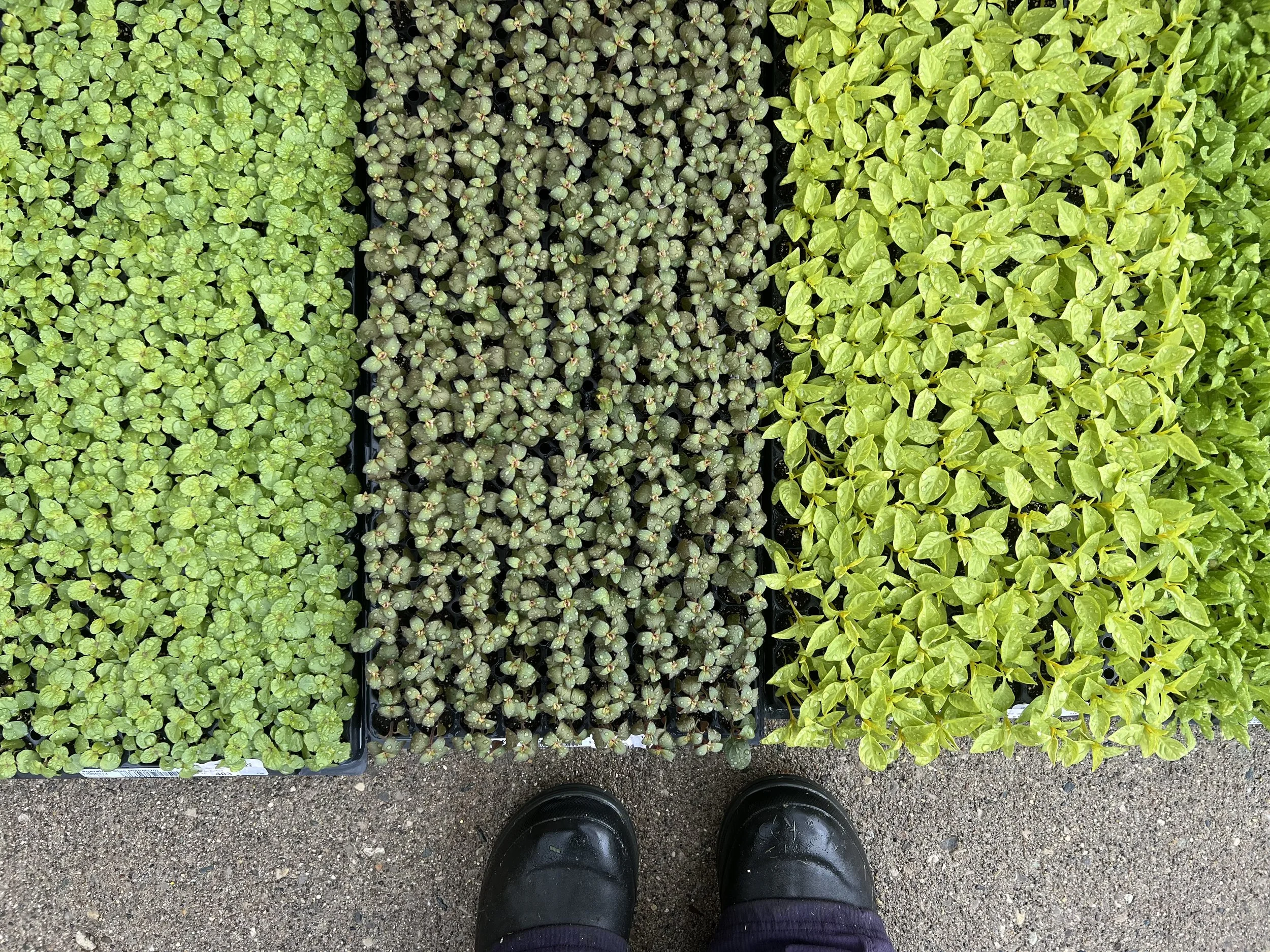
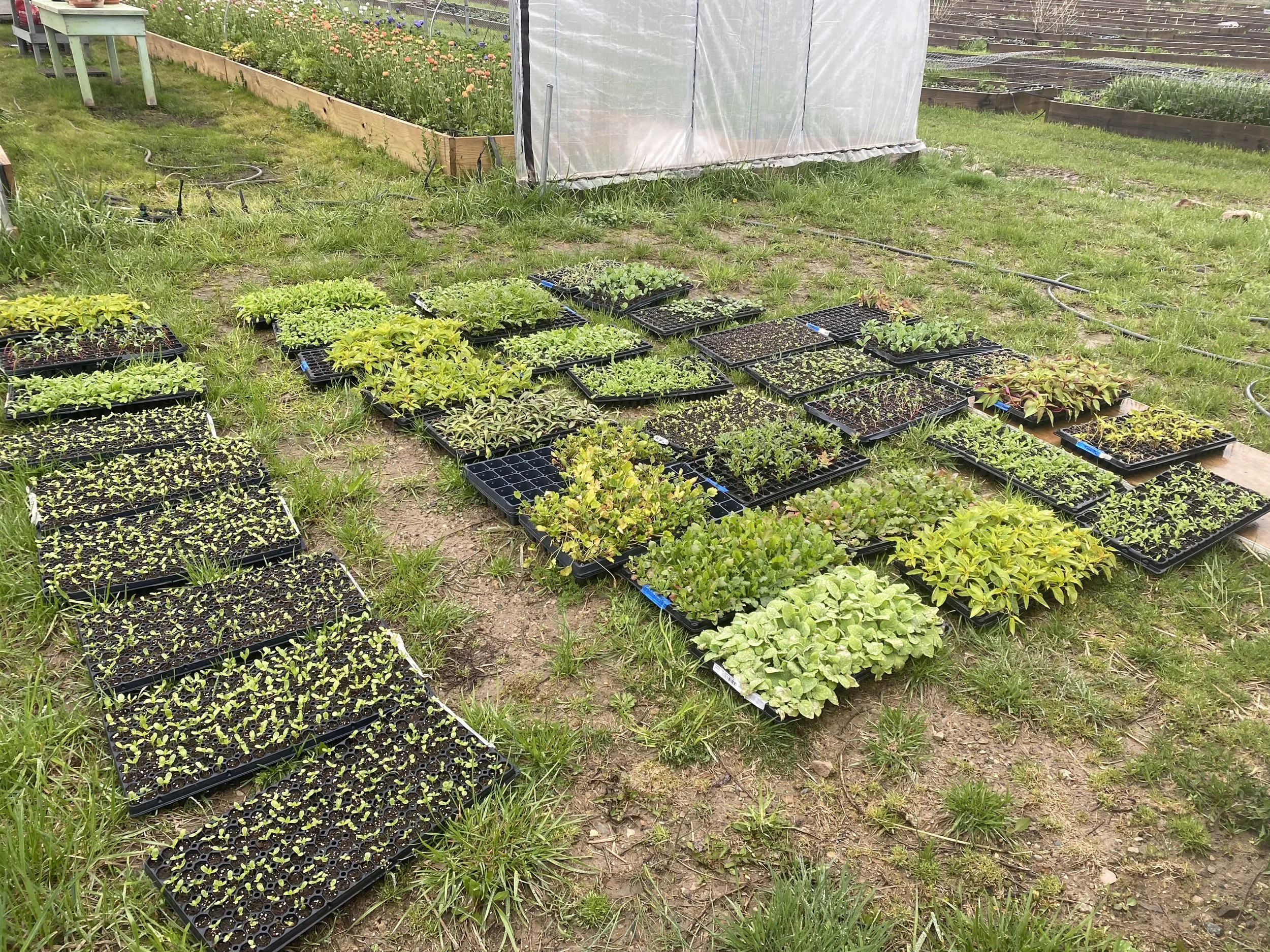
Let’s start with a real example from my farm. In my last plug order, I purchased 5,040 plugs for $1,621 including shipping. That comes out to $0.32 per plug.
Simple. No hidden costs. The plants arrive healthy, already germinated, and ready to grow.
But what happens when you grow those same plants from seed?
The True Cost of Starting Seeds
Seed Cost:
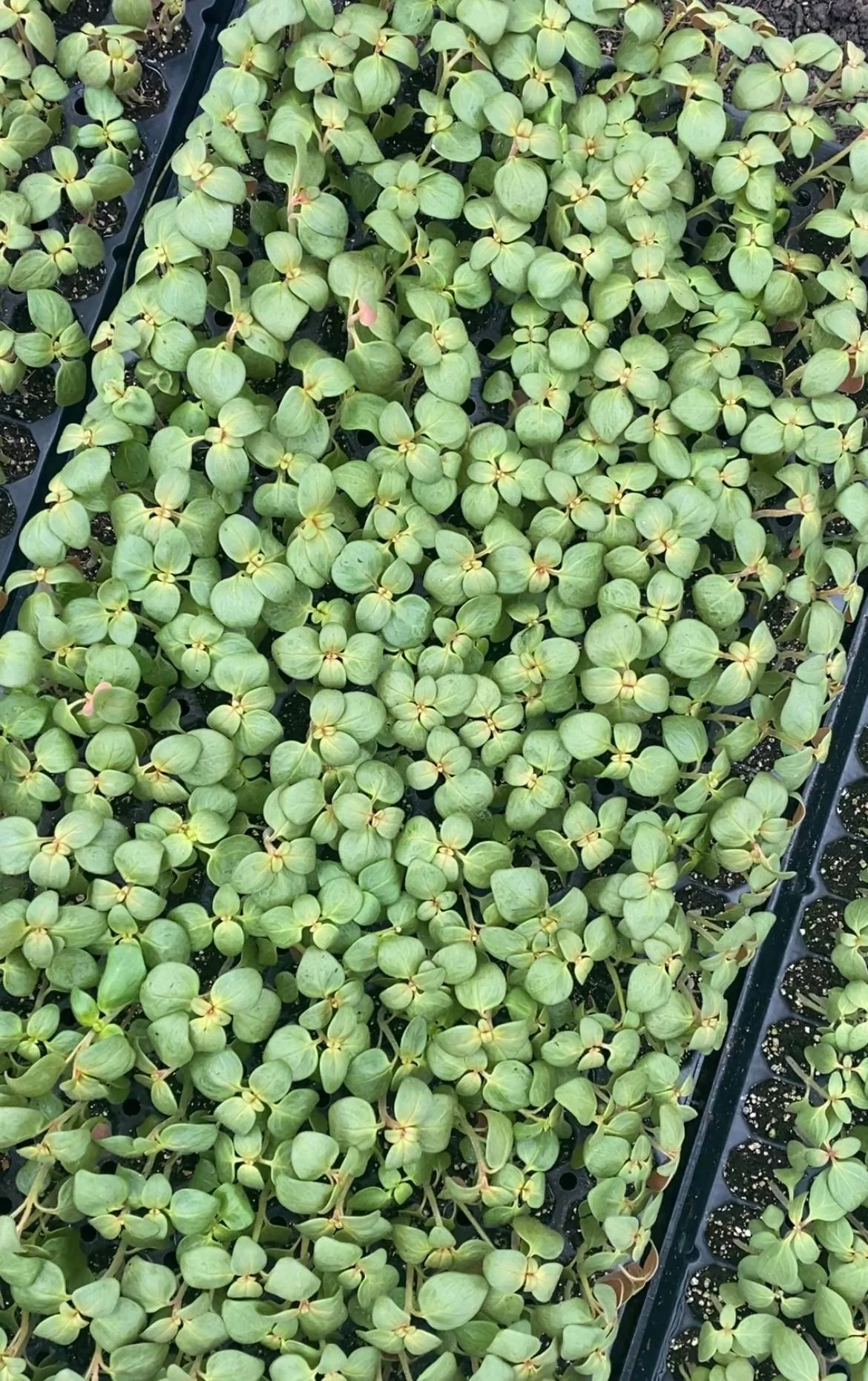
Now, let's calculate the price of seeds if you were to purchase your own. I chose the 4 varieties below because they were all part of my order. The average price using the below 4 seed varieties is $.0998 or $.10. (Data pulled from Johnny's.)
A Costa Snapdragon seed is $.11 ($5.50 for a pack of 50).
An Aster seed is $.094 ($4.70 for a pack of 50).
A Lisianthus seed is $.152 ($7.60 for a pack of 50).
A Celosia Cristata is $.0435 ($4.35 for a pack of 100).

The Labor Cost of Starting Seeds
So now let's take a look at the labor or time involved with growing your own seeds. Lisianthus is generally the first seeds to get started in the winter at 12 weeks prior to your first frost. Snaps are a close second at 10 weeks.
Let's assume you spend 30 minutes a day watering these seedlings. (We all know the number is much higher!) 12 weeks is equal to 84 days. If you spend 30 minutes a day for 84 days, you are spending 42 hours growing these seeds. (Take note: this does not include the time to clean the trays, fill the trays, make your own soil and sow the seeds - just daily watering!)
Next you need to look at what your time is worth. It could be worth very little an hour, or it could be worth hundreds. Let's say you could go out and get a job today for $30/hour. If so, the labor expense is $1,260 for 42 hours. If you spent an hour a day versus 30 minutes, the labor expense is $2,520!!

The Total Cost of Starting Seeds
The seed cost is $504. (5,040 seeds @ $.10). Your labor cost and seed cost at this point is $1,764. You have already surpassed the cost of plugs just from seeds and time spent. (And this assumes you only plant one seed per cell and every seed germinates and we all know that's a lie! LOL)
Let's play with the numbers for a second. Let's assume you spend an hour a day which allows for the time to start the trays, sow the seeds, thin the seedlings and so on and that you plant TWO seeds per cell which is more realistic. I mean, if you are like me and can't see diddly, each cell often gets 5-10 seeds!! Assuming 2 seeds and an hour a day, the cost is $1,008 in seeds and $2,520 in labor for a total of $3,528. The plugs cost $1,621. $3,528 vs. $1,621!!!
The Hidden Costs of Seed Starting
But we all know seed-starting has additional costs and considerations. Let's take a look at a few of those:
The shipping for the seeds.
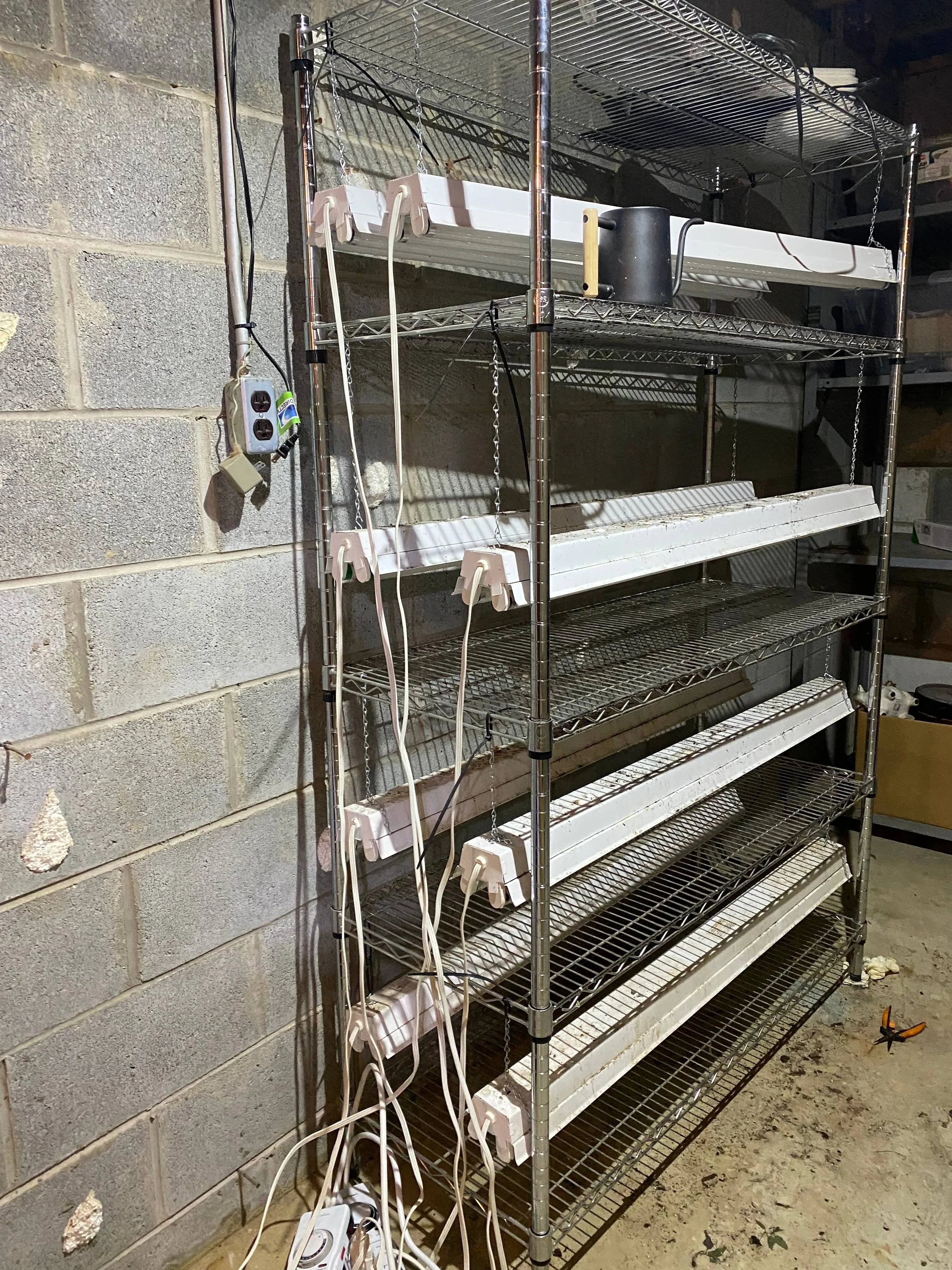
To grow 5,040 plugs in 72-cell trays (which is a common tray size) you would need 70 trays...SEVENTY!
To grow 70 trays on shelving units that fit 16 trays per unit, you would need 5 sets of shelving.
With 2 lights per shelf, you would need 8 per shelving unit or 36 lights.
If you have 36 lights, you need 72 lightbulbs.
Tray lids for germination.
Heat mats.
Timers.
Seed starting soil.
Vermiculite.
The electricity to run the lights.
Any fertilizer you use.
The Other Challenges of Starting Seeds
On top of the additional costs are poor germination, damping off, mold in the tray and dead seedlings from missing a day of watering. Do you have enough space or are you forgoing your kitchen table? Then you need to take into account the mess from starting seeds inside. Lugging buckets up and down stairs. Vacuuming piles of potting mix. Spilled water all over the floor. The tangle of cords and surge protectors. Don't forget about hardening off where you essentially carry all of your trays in and out twice a day. I could keep going and going!

When It Makes Sense to Buy Plugs
I know when starting out, you may not have the means to purchase plugs or can't justify ordering in such large quantities. But there will come a time in your business where it makes sense to order plugs. Whether you are running short on time, have limited space, are tired of keeping your cats out of the soil, or simply find it’s too much on your plate, outsource it!
You Don’t Have to Stop Starting Seeds Completely
And this isn’t an all-or-nothing deal. For example, I never order plugs for flowers I direct sow such as zinnias or cosmos. They are too easy. You could keep starting those on your own, and order in plugs for the tougher ones such as Lisianthus and Icelandic Poppies.
My Favorite Place to Order Plugs
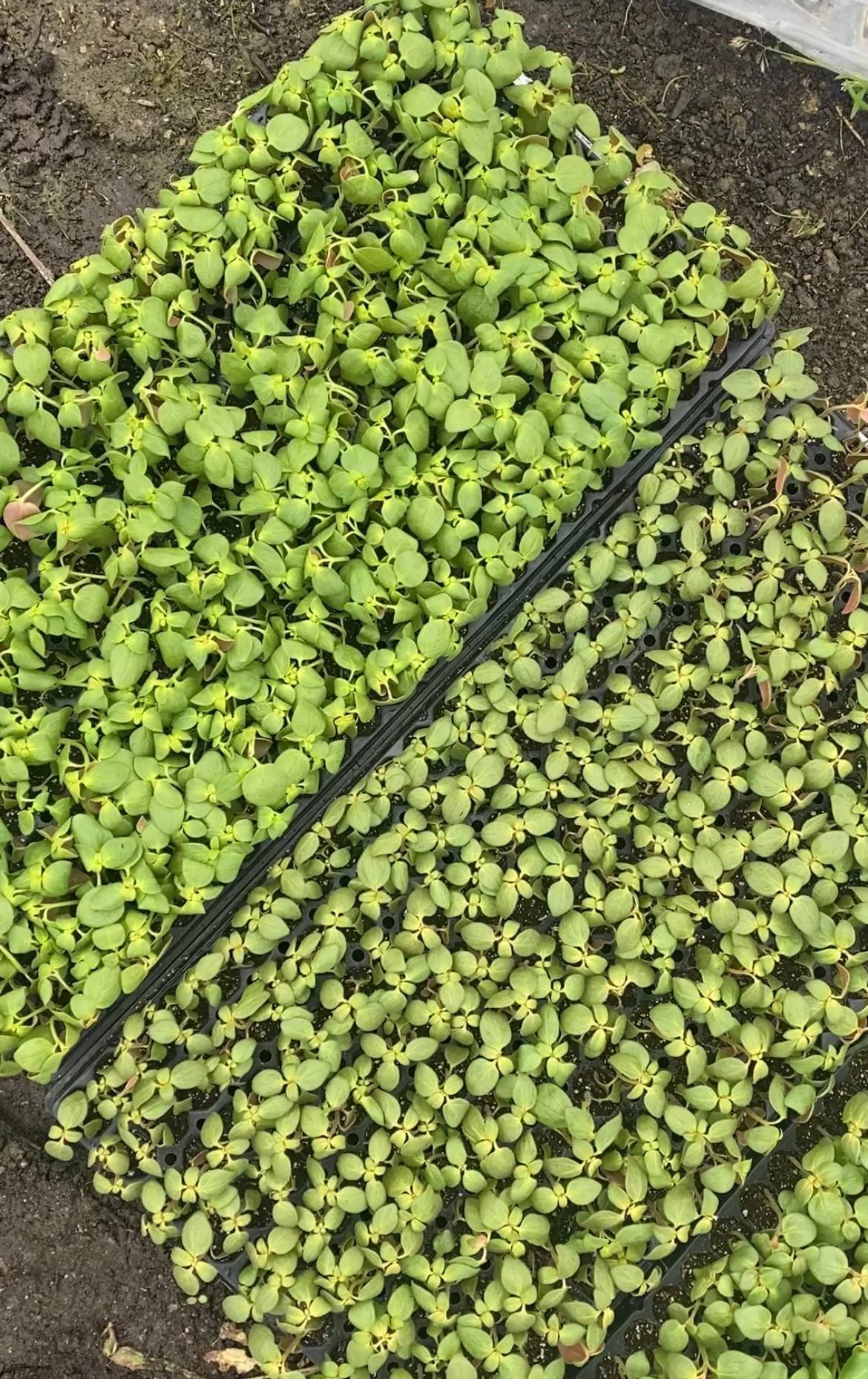
I love to purchase plugs from Farmer Bailey. I have them ship the week I want to get them planted, give the plants a day or 2 to settle after they arrive, and get them transplanted. And let me tell you, it is extremely satisfying to open the box and see seed trays with perfect germination, beautiful and healthy. Outsourcing that work to a supplier I trust saves me an incredible amount of time, money and work. I encourage you to spend a few minutes taking stock and consider whether plugs could do the same for you.
Should You Order Plugs for Your Flower Farm?
If you’re not sure whether plugs make sense for your farm, take a few minutes to evaluate your situation.
Ask yourself:
1. Which crops are easy and which are frustrating?
Some seeds are simple to grow. Others are a constant struggle.
2. What is your time worth?
Could your time be better spent on activities that generate revenue?
3. Are there ways to offset the cost?
Some growers split plug orders with friends or sell extra plants locally.
Work Smarter, Not Harder
Seed starting will always be part of flower farming. But as your farm grows, it’s worth asking yourself an important question: Is this the best use of my time?
I love digging into the numbers in my business and looking for opportunities to work smarter. When you actually run the math, sometimes the things we assume are cheaper like starting seeds aren’t always the best use of our time or resources.
Sometimes the smartest move is letting someone else handle the seed starting so you can focus on the parts of the business that generate the most value…marketing and selling your flowers.
Because building a sustainable flower farm isn’t about doing everything yourself. It’s about making smart decisions that allow you to work smarter, not harder.
This strategy is just one example from my 52 Ways to Work Smarter, Not Harderseries, where I share simple ideas to help flower farmers save time, increase efficiency, and build more profitable farms.